
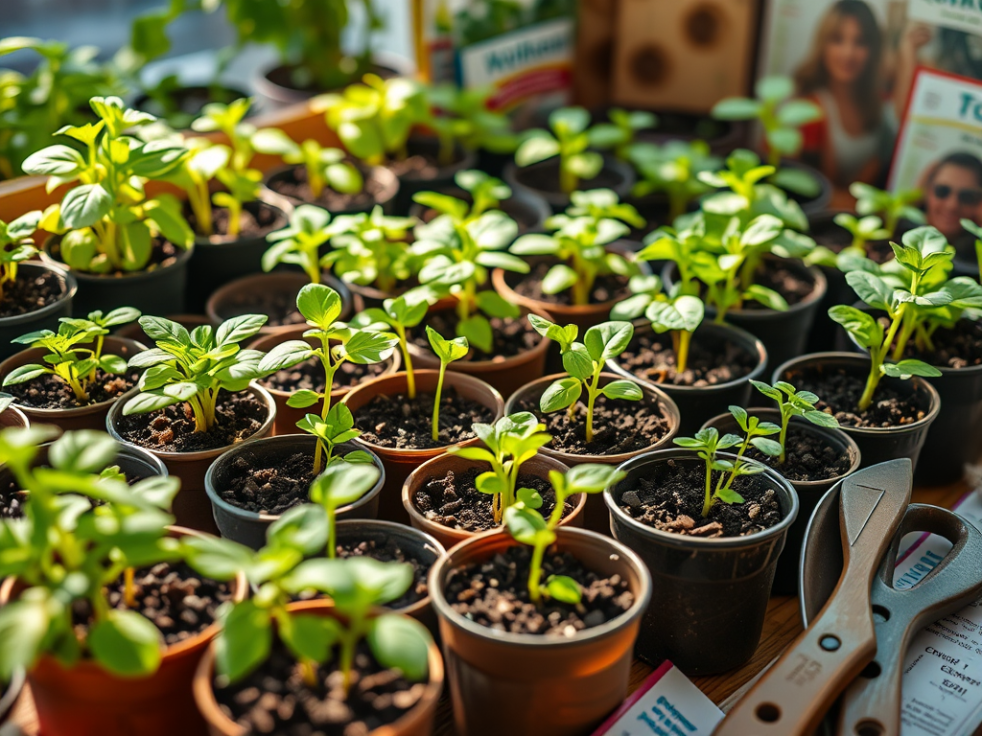

Have you considered starting your own seedlings this year? It may seen like a difficult thing to do, but with a little know-how it is easy to accomplish.
Here are some reasons to start your own seeds this year.
- Better selection. Buy your seeds early to avoid not getting what you are wanting and had planned on growing. Seed companies have so many more varieties than the seedlings that are grown by the nursery, greenhouse or big box store. In a previous post-SEE HERE-there is a list of some of the seed companies that seeds and plants can be ordered from. Most of them have a website and you can order on-line. Or you can request a paper catalog be mailed to you. I always so enjoy taking my time to read through the paper catalogs before I place my order. The choice is yours, not only what has been started by the garden business. A word of caution! Be careful and thoughtful or you will get carried away and order way too much! Don’t ask how I know this….
- Save money. You get more for your money when buying seeds as compared to buying the usual 6-packs of seedlings. For the price of the six-pack you get many more seeds in a packet. If you only need a few seedlings, most seeds can be saved for future use.
- Growing Practices. You can have control over the growing practices. If you are concerned about pesticides, herbicides, GMOs, etc., you can make sure of how your seedlings are being grown.
- Planting and Harvest. When you grow your own seedlings you have control over the planting time. You may want to start seeds early to be set out under a protective cover for an earlier harvest or start seeds late to have a later fall garden. You can grow just the amount you need.
- Earlier Harvest. Some types of plants will need to be started indoors as the growing season is not long enough to get a harvest before frost, but many of the plants that can be direct sown can be started indoors to get an earlier harvest or flowers. You can get a jump on the season.
- Successive Planting. You can have control over successive seed starting to give a long season of harvest.
- Proper Plants. You can make sure that you are growing plants suited to your region and location.
- Seed Saving. Many of the plant varieties (open pollinated or heirloom) can left to go to seed and the seeds saved from year to year. This is another way to grow plants that have become acclimated to you location.
- Quality Control. You have control over the quality and quantity of the seeds grown. You can grow strong, healthy seedlings.
- Food Security. Growing your own plants is a good way to enjoy some food security in this unsettled time. Grow enough to can and freeze and you will have food all year long.
- Avoid the Spring Crowd. I always make a trip (sometimes many trips!) to the greenhouse in the spring, but if you want to avoid the frantic rush of everyone in town scurrying to buy those plants to get them in the ground in a hurry, you do not have to go there.
- Sharing and Swapping. Starting your own seeds is a great way to do sharing and swapping with others. For many years I started seedlings to sell at the Farmer’s Market in the spring. The left-over seedings I would take to church and share with whoever wanted any plants, usually tomatoes. When church was over I would pull my van up to the church entrance and open the back with a sign-Free Tomatoes! I grew lots of unusual heirlooms and got lots of questions about each kind. It was a great joy to share with others.
- Fun. Seed starting is a very good garden activity to do when those long winter blues are feeling heavy. How nice to get your hands in the ‘dirt’ and be growing things when not much is happening outside. It is very fun to watch the seeds emerge and grow.
Have you ever started seeds before? Leave me a comment and share how your seed starting experience went for you!
Planting Seeds
We can plant the seeds of kindness,
Seeds of hope and joy and peace.
We can plant, and we can water.
Only God can bring increase.
All God asks is faithful planting,
Constant reaching toward the goal.
Then His blessed Holy Spirit
Can reach out to save a soul.
We know God will never ask us,
“Just how well did you succeed?”
All He wants is faithful living,
Faithful planting of His seed.

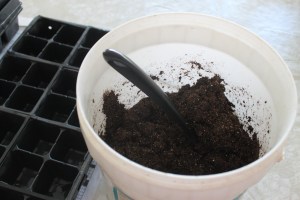
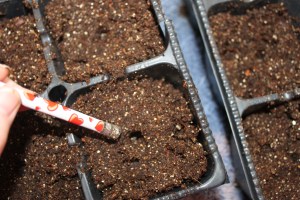
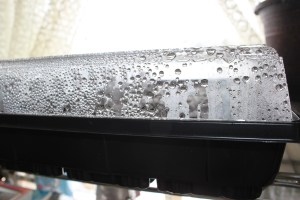
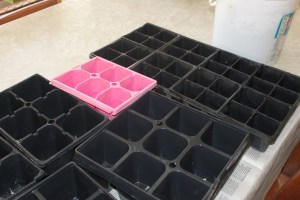 You can purchase ready made starting trays from the store that come already filled with starting mix and have a humidity dome. These are the easiest. Just wet the soil and you are ready to plant.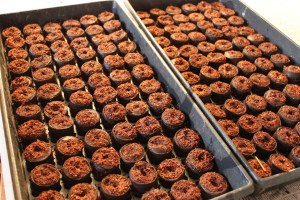



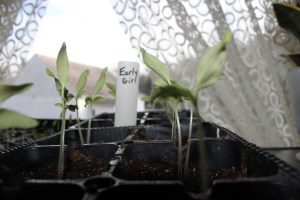
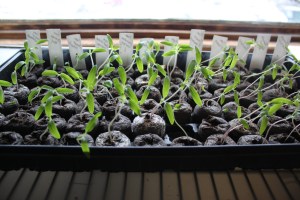 You will need to provide good growing light for the seedings. This usually involves artificial light. The seedlings will grow tall and spindly and lean toward the light if there is not enough light. You are wanting short and stout seedlings. When I was growing plants for the Farmer’s Market, I had a seed starting set up that involved a metal shelving unit with regular shop lights hanging on chains that I could adjust as the seedlings grew taller. The lights need to be just inches above the growing seedlings. Regular shop lights worked fine for me as opposed to more expensive grow lights. I also had the shop lights plugged into a power strip that was plugged into a timer so the seedling received the correct time of light. You will usually be starting seeds when the daylight is less. Seedlings need 16-18 hours of light to grow properly.
 margiesgarden.com