
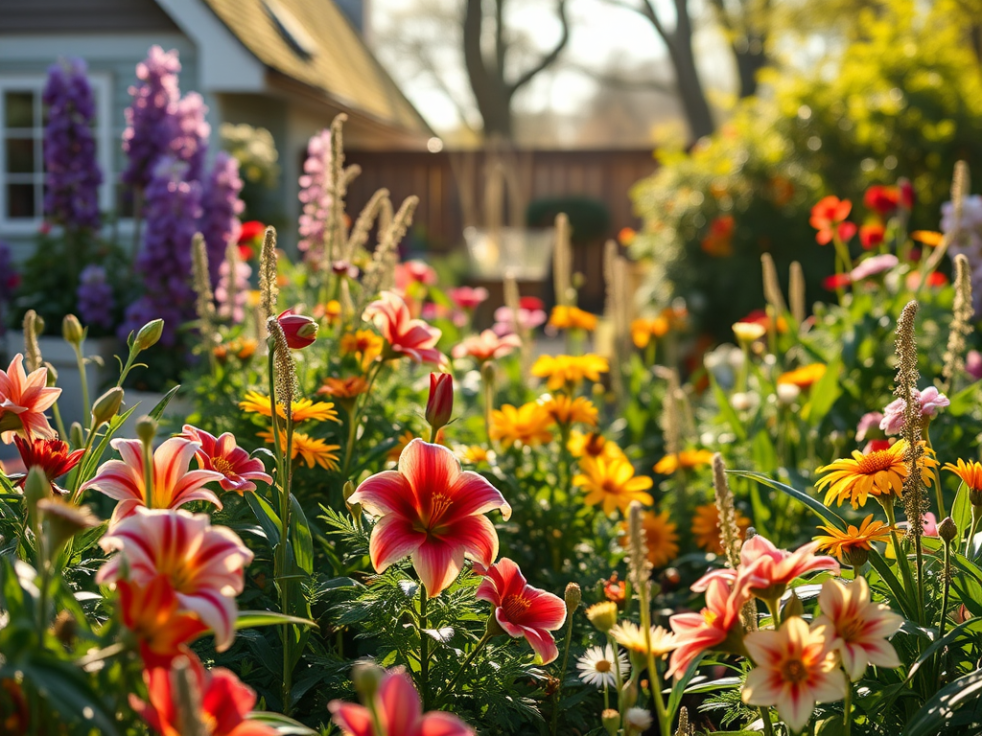

The month of May has arrived….and what a busy month this is in the garden!
The gardens are coming alive and there is much to be done.
But remember the old adage-
In the middle of May comes
the tail of winter.
So while you are enjoying the beautiful spring weather, remember to have your fleece cloth handy for that unexpected freeze.
I garden in the mid-Atlantic region, which is zone 5-6. The last expected frost for this region is the middle of May, usually around Mother’s Day, but we are not entirely frost safe until the end of May, or around Memorial Day. So, plant accordingly.
Here is a list of some things that can, and probably should be done in the garden this month-
- Perennials can be planted. This is also the time to dig and divide any overgrown perennials, such as hostas and daylilies.
- Tender summer blooming bulbs, such as dahlias, gladiolas and canna lilies can be planted out after the last frost.
- After the spring blooming bulbs have flowered, remove the spent flower head but leave the foliage until it dies back naturally. Wait to cut off the leaves until they have turned brown.
- Harden off your seedlings. Any seeds that have been started indoors should be potted up and can be taken outside on nice days to begin hardening off so they are prepared to be planted out.
- Warm season flowers and vegetables can be direct sown in the ground after the last frost. For vegetables, these would be green beans, corn, cucumber, pumpkin and squash. For a longer harvest window you can plant short rows of each every 2-3 weeks for a longer successive harvest.
- House plants that have spent the winter indoors can be taken outside on nice days to get acclimated to being outside again. Put them in a sheltered area and do not put them in direct sun. You can begin fertilizing them now. Any pot bound plants need to be re-potted up.
- Window boxes, planters and pots, as well as flower beds can be planted up with tender blooming annuals after the last frost date.
- Prune any trees and shrubs that need help. Remove all dead, diseased or crossing limbs.
- Prune back the spring flowering shrubs after they have finished blooming to keep them compact such as lilac, forsythia and quince.
- Prune and shape any evergreens if needed.
- Prune and fertilize roses.
- Begin mowing the lawn. Leave the grass cuttings to provide nitrogen. Re-seed if needed. Now is the time to spread any ‘weed and feed’ product on the lawn.
- Set up supports as needed. In the vegetable garden-tomato supports and trellis for climbing vegetables. In the flower garden-trellis and supports for climbing plants such as clematis.
- If you use an irrigation system, get it set up and tested before too much growth has taken place.
- Make sure that newly planted seeds are kept watered.
- Regularly harvest the rhubarb and asparagus.
- Do any thinning of early spring sown vegetables.
- Put up hummingbird feeders.
- Keep up the regular maintenance of the the yard and garden. This includes weeding on a regular basis. Try to keep after the weeds while they are just starting to grow and still small. The object is to not let any weeds go to seed. Weed pressure is highest in the spring and early summer, and if you can keep after them, it will not be so bad later in the season.
- Fertilize as needed.
- Mulch as needed. Do not apply mulch until the ground has warmed up sufficiently. Keeping the garden mulched will cut back on so much work later on.
- If you haven’t already, start and keep a garden journal. Also, take regular pictures of your garden. It is amazing what you can’t remember from year to year and photos are a big help.
More work now will mean less work later when the heat of summer is here.

( AI generated photo)
So, enjoy the beautiful spring weather while it is still not too hot.
Take time to savor the sights, sounds and smells of May.
A Prayer For Spring
Oh, give us
pleasure in the flowers
today.
And give us not
to think so
far away
As the uncertain
harvest.
Keep us here
all simple in the
springing
of the year
Robert Frost
Happy Gardening!
Margie

 Good by summer!


 margiesgarden.com